
Soil diagnostics
The Soil Microbiome
A lever for action in the face of climate change.
The microbiome is a community of microorganisms that coexist within the same environment. In soil, it forms a rich and complex ecosystem that constantly interacts with all surrounding elements, including animals and plants.
One gram of soil contains one billion bacteria about 1,000 times more than fungal cells. This billion cells is far from a homogeneous mass; it forms a diverse and structured ecosystem composed of bacteria specialized in performing specific functions, continuously interacting with one another.
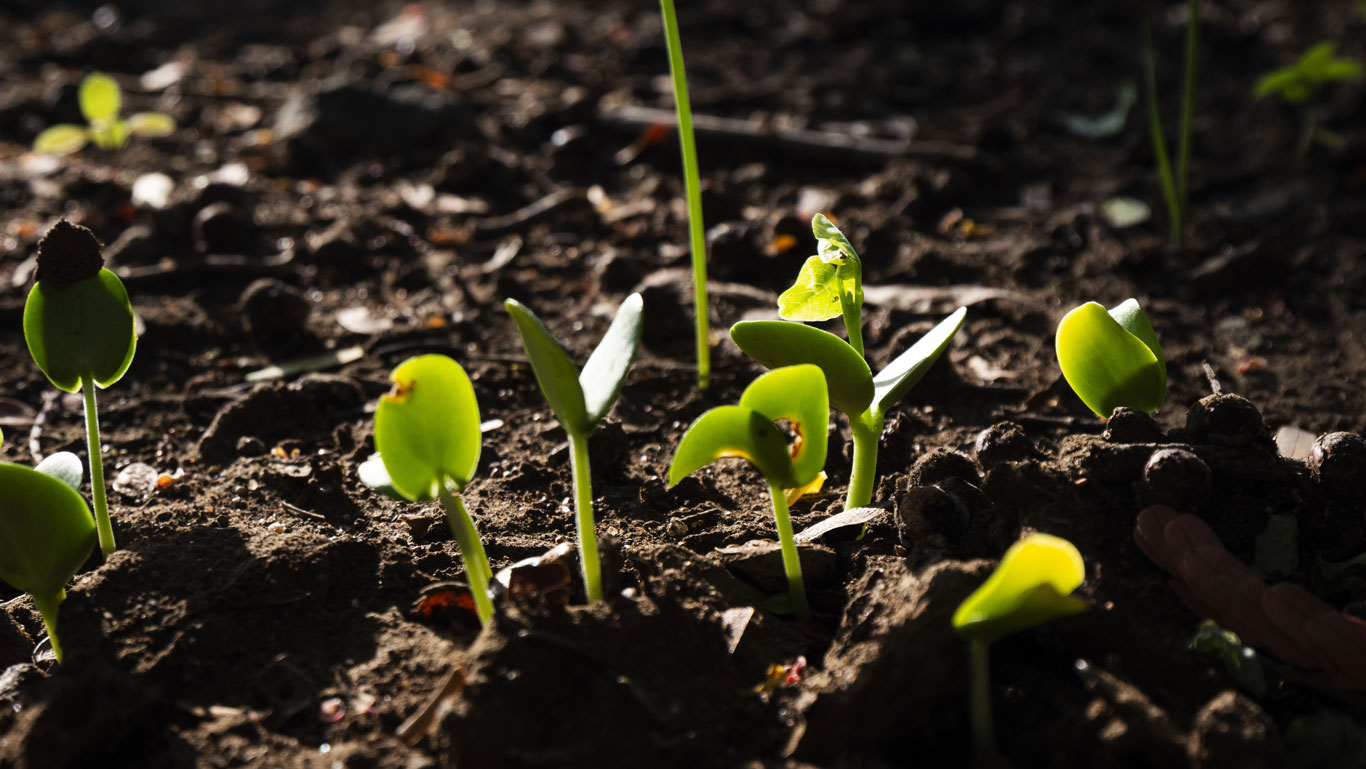
Bacteria play a key role in carrying out soil functions and maintaining its health. The soil microbiome therefore has a direct impact on agricultural yields and the quality of agricultural production.
The soil microbiome actively contributes to the major functions of soil: water retention, nutrient recycling, carbon storage, nitrogen fixation, regulation of greenhouse gas production, support of biodiversity, soil structuring, and regulation of contaminants. It therefore has a direct impact on the resilience of soils and crops in the face of climatic hazards.
Soil bacteria are involved in each of these functions. They are therefore essential to the proper functioning of soils and provide multiple ecosystem services. Soil bacteria thus support the productivity of agricultural soils and the quality of yields. However, agricultural practices place chronic stress on this fragile ecosystem, gradually leading to its weakening and even to the loss of certain bacterial species that carry unique functions: the ‘keystone’ species.
A deep understanding of how soil bacterial communities function makes it possible to consider targeted restoration strategies using keystone species.
90 % of soil bacteria are still unknown because they have never been cultured. This lack of knowledge hinders our understanding of the microbiome and its overall functioning. STARFISH Bioscience is shedding light on this microbial biodiversity by using innovative DNA sequencing technologies to identify and understand the functioning of soil bacteria.
This knowledge is the starting point for implementing soil microbiome regeneration strategies to improve soil health — ultimately enabling us to produce more, produce better, and produce sustainably under the conditions imposed by climate change.

DIAGNOSTIC SERVICE
High value-added insights into the microbiome of your soils.
Our functional soil microbiome diagnostic service uses cutting-edge technologies based on high-resolution DNA sequencing of soil microorganisms. We then analyze these data using innovative bioinformatics tools developed by the STARFISH Bioscience R&D team to give meaning to this information and identify concrete levers for action.
Use case
Microbial Biodiversity
Unlike other methods used to analyze soil bacterial communities, which provide only a partial description of the major bacterial families present, our analytical methodology makes it possible to precisely identify each species encountered. Bacterial biodiversity is thus revealed in detail. Beneficial species and pathogens become visible.
Functional Bacterial Ecosystem
The innovative bioinformatics tools developed by STARFISH Bioscience enable a completely new approach to studying the microbiome: we reconstruct and analyze the bacterial functions (water retention, carbon cycle, nitrogen cycle, etc.) present in soil microbiomes.
Our analysis reconstructs the functional relationships between bacteria at the ecosystem scale. It thus provides a systemic understanding of how the soil microbiome operates and reveals potentially altered metabolic pathways. This unique information makes it possible to make decisions based on the measured functional potential of each soil.
Tool for Monitoring the Impact of Agricultural Practices
The precision of our microbiome analysis makes it a perfectly suited tool for improving knowledge of one’s soil. Our tailored approach combines microbiome analyses with the physicochemical measurements of these soils, as well as with the farmer’s data (vigor, yield, deficiencies, dieback, etc.), to enable precise analyses and interpretations in response to the issues observed.